
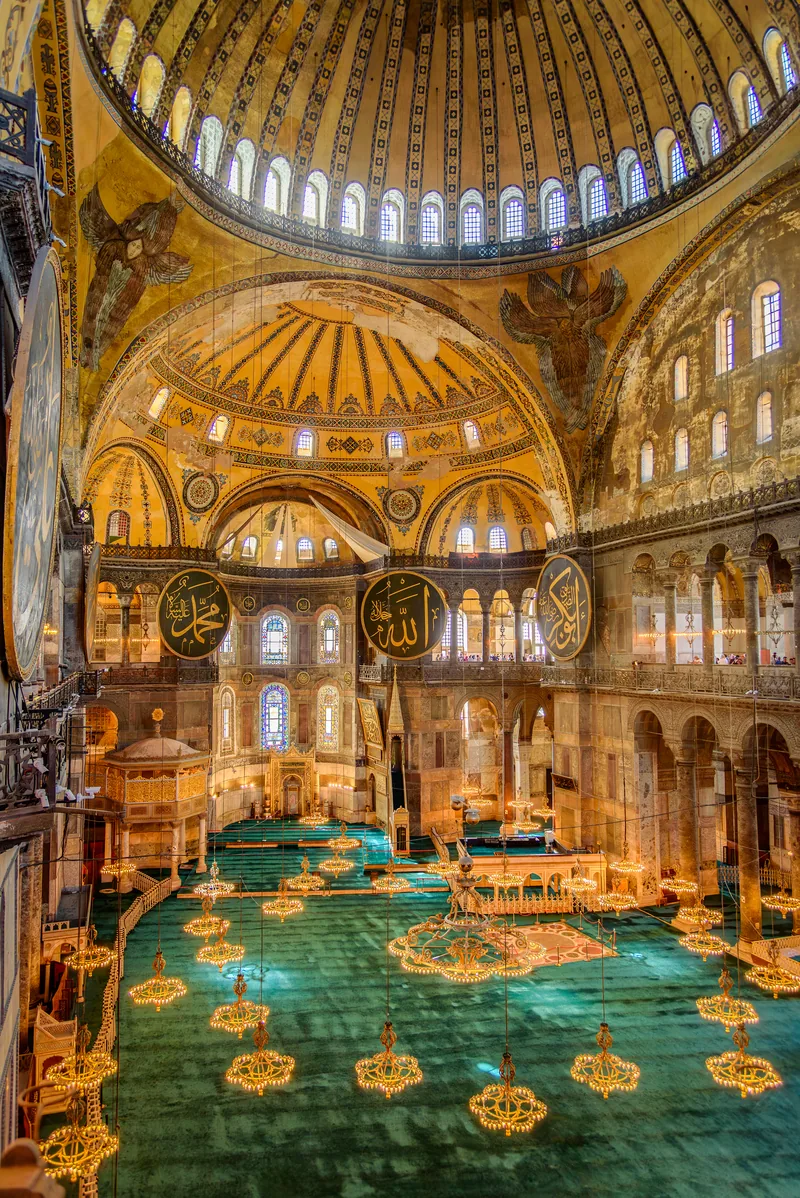
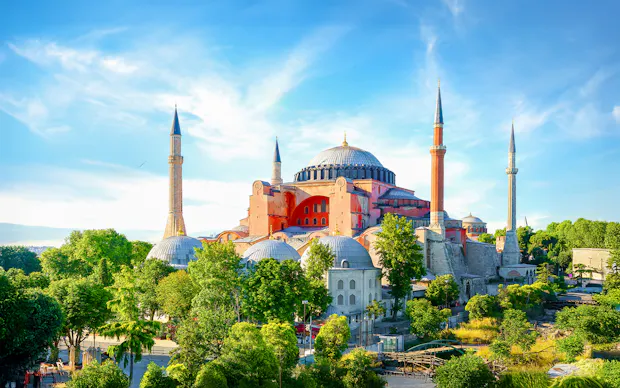
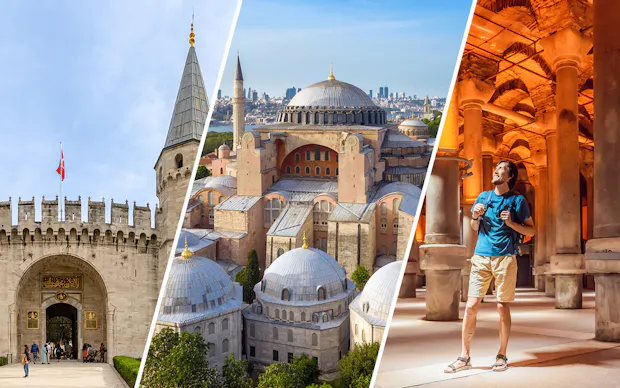
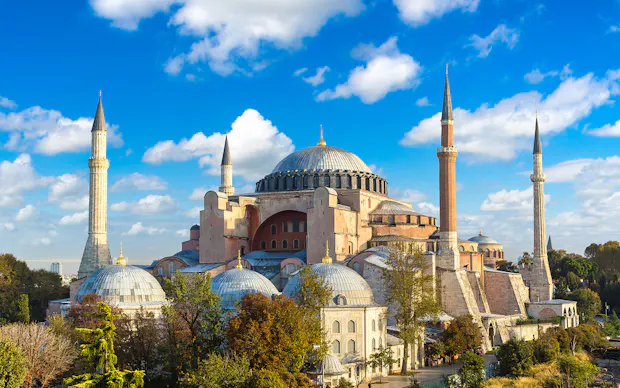
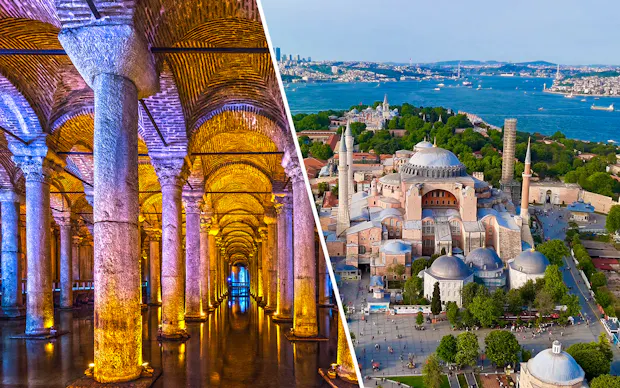
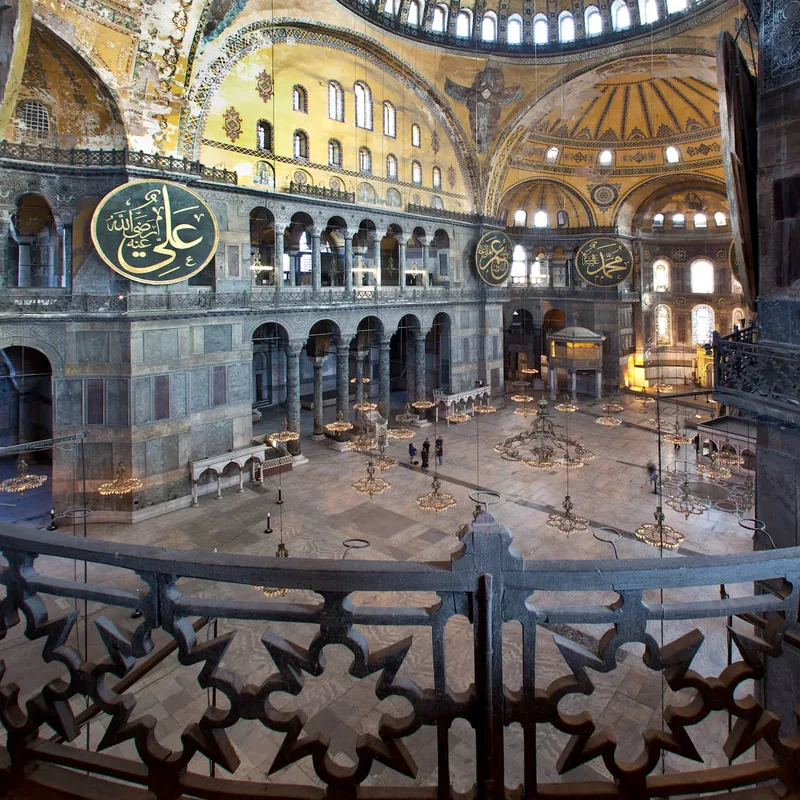
Inside Hagia Sophia, the 55-metre dome appears to float on a ring of 40 windows, while Byzantine gold mosaics share the walls with giant Ottoman calligraphy roundels. The upper gallery, reached by a stone ramp, holds the finest surviving mosaics.
Source: official figures published by the Turkish Ministry of Culture & Tourism / Directorate of Religious Affairs (muze.gen.tr), verified June 2026.
The great dome
The dome rises about 55.6 metres above the floor and spans roughly 31 metres. A continuous ring of windows at its base floods the interior with light and creates the famous effect of a canopy suspended in mid-air. Architects Anthemius of Tralles and Isidore of Miletus engineered it in just five years, from 532 to 537.
The mosaics you shouldn't miss
After 1453 many figural mosaics were plastered over; restorers have since uncovered several masterpieces. Look for these on the gallery level:
- The Deësis (13th c.): Christ flanked by the Virgin and John the Baptist, prized for its tender faces.
- The Empress Zoe panel: Christ between Constantine IX and Empress Zoe.
- The Comnenus mosaic: the Virgin and Child with Emperor John II and Empress Irene.
- The apse Virgin and Child: the great gold half-dome above the former altar.
Calligraphy, marble and the Omphalion
Eight giant medallions, about 7.5 metres across, carry the names of God, Muhammad and the early caliphs in gilded script — among the largest calligraphic panels in the Islamic world. On the floor near the centre, the inlaid marble Omphalion marks the spot where Byzantine emperors were crowned.
🏛What the €25 gallery ticket shows you
The tourist route covers the upper gallery and its mosaics. The ground floor remains a prayer space; visitors view it respectfully from the designated area. For the fee breakdown see tickets and prices.
The weeping column and other curiosities
In the north aisle stands the "weeping column," sheathed in bronze with a hole worn smooth by centuries of hopeful fingers; legend ties its dampness to healing. Nearby, vast porphyry and verd-antique columns — some reused from older temples — show how the builders gathered the empire's finest stone into one room.
See it with a guide
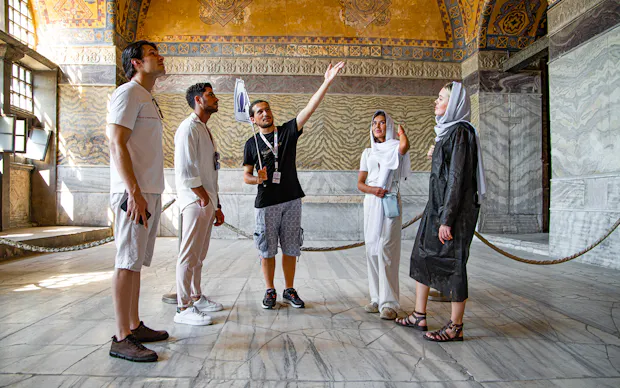
A guided tour decodes the mosaics and the symbolism you'd otherwise walk past.
Make the most of your visit
Give yourself at least an hour for the gallery. Time your slot with our opening hours guide, and read the history so each mosaic lands in context.
Frequently asked questions
What is there to see inside Hagia Sophia?
The highlights are the great dome, the Byzantine gold mosaics on the upper gallery (including the Deësis), the giant Ottoman calligraphy medallions, the marble Omphalion and the so-called weeping column.
Can tourists go upstairs in Hagia Sophia?
Yes. The €25 gallery ticket gives tourists access to the upper gallery, reached by a stone ramp, where the best-preserved mosaics are.
How big is the dome of Hagia Sophia?
The dome rises about 55.6 metres and spans roughly 31 metres, ringed by 40 windows that make it appear to float.
Are the mosaics still visible?
Several major mosaics have been uncovered and restored, including the Deësis and imperial panels on the gallery. Some figural images near the prayer area may be screened during worship.
How long should I spend inside Hagia Sophia?
Plan 60–90 minutes for the gallery route, or longer with a guided tour.